


Immigration
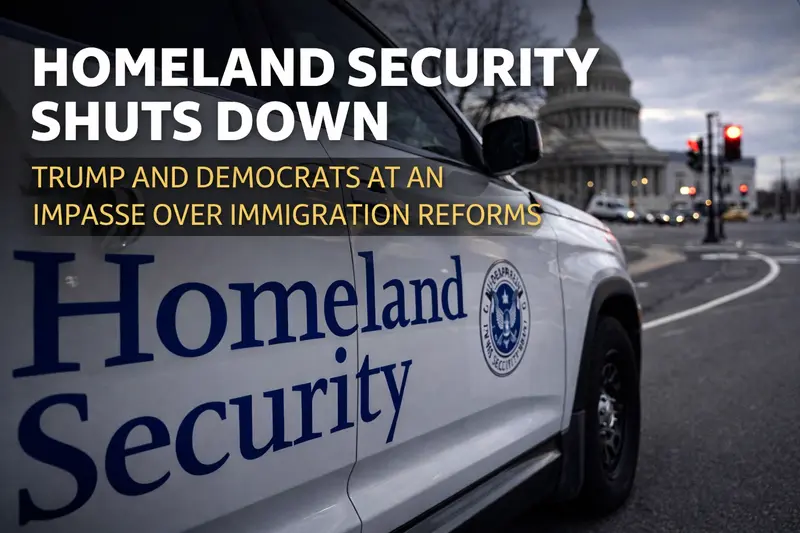
DHS Shutdown: Immigration Reform Clash Between Trump and Democrats Escalates
The U.S. Department of Homeland Security (DHS) officially shut down this weekend after funding expired at 12:01 a.m. Saturday, following stalled negotiations between the Trump administration and Senate Democrats over proposed immigration enforcement reforms.
The shutdown comes amid heightened political tensions after two American citizens were fatally shot in Minneapolis during federal immigration operations last month. The incident has intensified scrutiny over Immigration and Customs Enforcement (ICE) and Customs and Border Protection (CBP).
What the Shutdown Means
Although DHS funding has lapsed, the shutdown is limited in scope. Most federal employees within DHS — including those at FEMA, the Transportation Security Administration (TSA), and the Coast Guard — are required to continue working but will temporarily go unpaid.
However, ICE and CBP operations will remain largely unaffected. These agencies still have access to approximately $75 billion in previously approved funding, allowing immigration enforcement efforts to continue uninterrupted.
Congress is currently out of session and is not scheduled to return until February 23, raising the possibility that the shutdown could last at least 10 days unless lawmakers are called back for an emergency vote.
Democrats Demand Reforms
Senate Democrats have outlined a list of reform demands, including:
-
Requiring immigration agents to display identification
-
Mandating judicial warrants before entering private property
-
Prohibiting agents from wearing masks during operations
-
Strengthening oversight of ICE enforcement actions
Senate Minority Leader Chuck Schumer stated that Democrats will not support temporary funding bills unless meaningful reforms are included.
“We want to fund the Department of Homeland Security, but only a department that is obeying the law,” one Democratic lawmaker said.
White House Pushback
A senior White House official confirmed that negotiations are ongoing but rejected some Democratic proposals, particularly the requirement for judicial warrants in certain enforcement actions.
The administration maintains that immigration enforcement remains a core policy priority and has accused Democrats of politicizing the issue.
House Republicans argue that the shutdown does not meaningfully impact border security and accuse Democrats of targeting agencies unrelated to their reform demands.
Public Opinion Shifts
Recent polling shows public support for the administration’s handling of immigration enforcement has declined. Only 40% of Americans now approve of how border security is being managed, compared to higher approval ratings last year.
Political analysts suggest this shift in public opinion has emboldened Democrats to push harder for structural changes within DHS.
A Narrower Shutdown
Unlike the historic 43-day government shutdown that affected all federal agencies last year, this shutdown is limited exclusively to DHS. All other federal departments remain funded through September.
While negotiations continue behind closed doors, both parties signal willingness to reach a deal — but significant differences remain.
For now, DHS remains partially shuttered as Washington navigates another high-stakes standoff over immigration policy.
What's your reaction?
0

AWESOME!
0

LOVED
0

NICE
0

LOL
0

FUNNY
0

EW!
0

OMG!
0

FAIL!
Recent News




Comments
Leave a Reply