


World
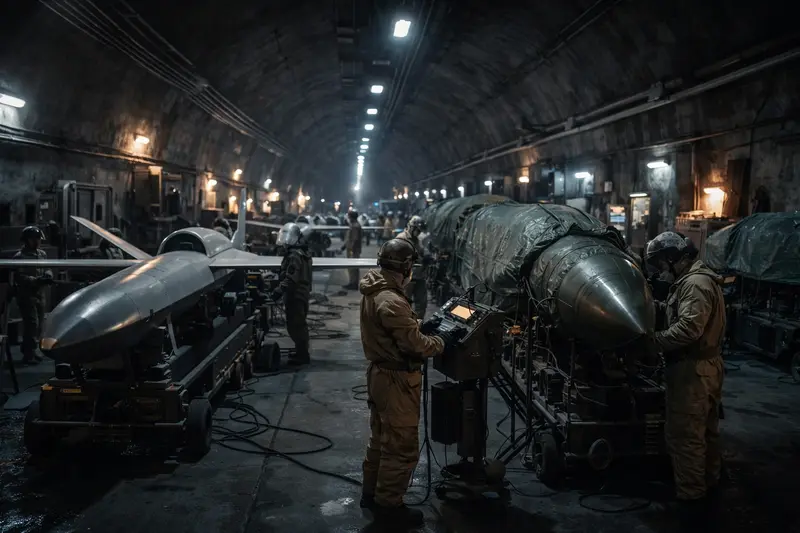
Intelligence Reports Reveal Iran’s Underground Drone Production Network Remains Active
Recent intelligence assessments suggest that Iran continues to maintain a significant military production capability despite ongoing airstrikes targeting its infrastructure.
According to multiple reports, Iran still operates 22 underground facilities dedicated to drone and missile production, with the capacity to manufacture up to 400 drones per day.
🏭 Underground Industry Survives Strikes
Before the latest wave of Israeli and U.S. strikes, Iran was believed to have around 28 such facilities. While several entrances and power sources have reportedly been damaged, a large portion of the network remains operational.
These underground installations, often hidden beneath vast desert areas or reinforced structures, are designed to withstand aerial bombardment and continue functioning under pressure.
As a result, Iran has been able to sustain its military output and retain the ability to respond to attacks, even after repeated strikes on its territory.
🎯 Why Airstrikes Alone May Not Be Enough
Military analysts, including Israeli officials, have acknowledged that airpower alone may not be sufficient to neutralize Iran’s capabilities.
The reasons are clear:
-
Multiple dispersed production sites
-
Large underground stockpiles of weapons and materials
-
Hidden launch systems embedded beneath the ground
-
Complex and redundant infrastructure
This layered strategy makes it extremely difficult to fully dismantle Iran’s operational capacity from the air.
⚙️ A Strategy Built on Resilience
Iran’s military-industrial approach is built on decentralization and concealment. By spreading production across multiple hidden locations, the country reduces the risk of total disruption.
This also allows Tehran to maintain a continuous ability to retaliate, which in turn strengthens its position in any potential negotiations or ceasefire discussions.
Even former U.S. President Donald Trump has previously acknowledged Iran’s strategic adaptability, noting the country’s ability to operate under pressure.
👩🔧 Human Capital and Internal Strength
Beyond infrastructure, Iran’s strength also lies in its human resources. Thousands of engineers are trained each year, contributing to the development of advanced systems.
In some sectors, women are also actively involved in technical and industrial roles, reflecting a broader mobilization of the workforce in support of national capabilities.
🌍 The Information War
Alongside military operations, there is also an ongoing information battle. Conflicting narratives, selective reporting, and strategic communication play a major role in shaping global perception.
Understanding the full picture requires analyzing multiple perspectives and sources.
⚠️ Conclusion
The persistence of Iran’s underground production network highlights the complexity of modern warfare. Despite sustained pressure, the country continues to demonstrate resilience and adaptability.
As the conflict evolves, both military and informational strategies will remain critical in determining the outcome.
What's your reaction?
0

AWESOME!
0

LOVED
0

NICE
0

LOL
0

FUNNY
0

EW!
0

OMG!
0

FAIL!
Recent News


Comments
Leave a Reply