

World
U.S. and Israel Launch Major Strikes on Iran, Triggering Retaliation and Global Concern
The United States and Israel carried out a large-scale coordinated attack on Iran early Saturday, triggering a wave of retaliatory missile and drone strikes from Tehran. As multiple explosions were reported across Iranian cities, President Donald Trump urged the people of Iran to “take control of your destiny” and stand up to their government.
Initial strikes hit areas near the office compound of Supreme Leader Ayatollah Ali Khamenei, with large plumes of smoke rising over Tehran. Iranian media confirmed attacks in several provinces, though it remains unclear whether the supreme leader was inside the targeted building. Later that day, Trump claimed that Khamenei may have been killed in the strikes, although he said confirmation was still pending.
U.S. Claims Major Damage to Iran’s Leadership
President Trump stated in an interview that a significant portion of Iran’s leadership had been eliminated, suggesting that “most” top officials were impacted by the strikes. The U.S. Vice President monitored the operation from the Situation Room as military leaders assessed the results.
Worldwide Reactions: Condemnations, Warnings, and Emergency Diplomacy
United Nations Secretary-General António Guterres condemned both the U.S.-Israeli strikes and Iran’s retaliatory attacks, calling for an immediate ceasefire to avoid a broader regional conflict. The UN Security Council scheduled an emergency meeting as European leaders urged restraint and diplomatic dialogue.
Countries across the Middle East quickly reacted:
-
Saudi Arabia, Jordan, Qatar, Kuwait, UAE, and Bahrain condemned Iran’s retaliation.
-
China and Russia denounced the U.S. and Israel, calling the operation an act of aggression.
-
Ukraine supported the strikes, citing Iran’s role in supplying weaponry to Russia.
Iran Reports Widespread Damage
Iranian authorities reported targeted strikes in dozens of cities, including Tehran, Isfahan, Shiraz, and Tabriz. Early estimates suggested more than 200 deaths and hundreds of injuries. Military sites, air defense systems, and Revolutionary Guard facilities were among the primary targets.
The U.S. military described the operation, code-named “Epic Fury,” as one of the largest American offensive deployments in years.
Iran Responds With Missile and Drone Attacks
Iran launched swarms of drones and ballistic missiles toward Israel and U.S. bases in the region. Most were intercepted, though some debris caused casualties, including a serious injury near Tel Aviv and at least one death in the UAE.
Iran’s Revolutionary Guard said it targeted:
-
U.S. bases in Bahrain, Qatar, and the UAE
-
Israeli military sites
-
Naval assets in the region
Growing Panic Across the Region
In Tehran, residents rushed to supermarkets to stock up on food and water, causing shortages. Highways leading out of the capital were packed as many attempted to flee the city. In Baghdad, hundreds gathered in support of Iran, clashing with police near the Green Zone.
Airports across the Middle East experienced mass delays and cancellations as several countries closed their airspace.
Fears of a Broader Regional War
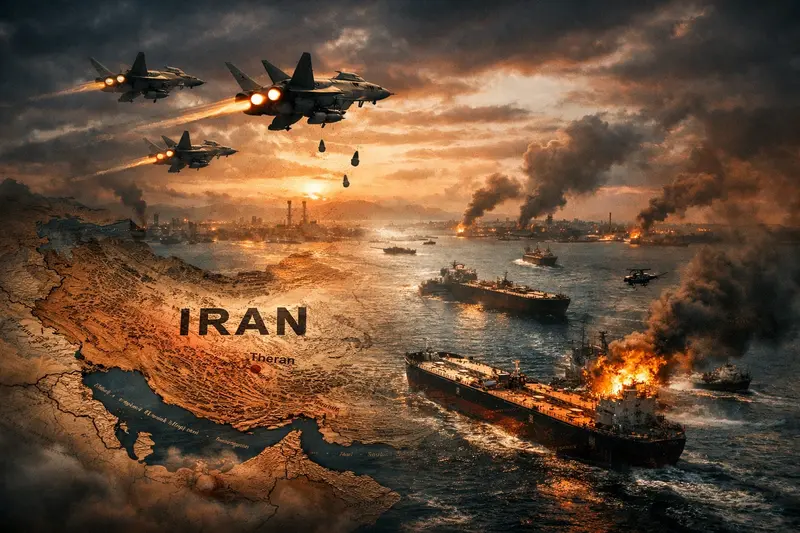
Analysts warn that the conflict could expand dramatically, especially given Iran’s strategic location near the Strait of Hormuz, a vital corridor for global oil shipments. Energy markets already saw price spikes as concerns grew over potential disruptions.
In Washington, lawmakers remain divided. Critics accused the administration of escalating the conflict without congressional authorization, calling it a dangerous step that could destabilize the entire region.
What's your reaction?
0

AWESOME!
0

LOVED
0

NICE
0

LOL
0

FUNNY
0

EW!
0

OMG!
0

FAIL!
Recent News


Comments
Leave a Reply