

Immigration
US Criticized After Gay Asylum-Seeker Deported to Cameroon Despite Protection Order
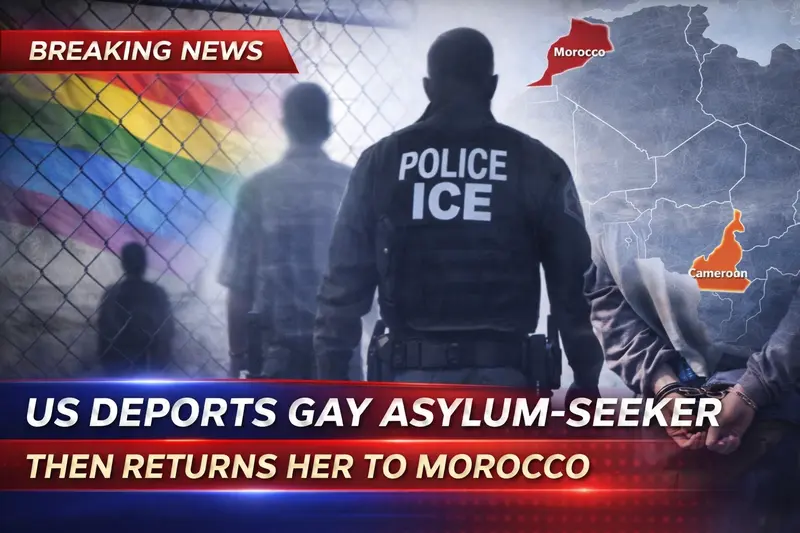
US Deportation Practices Under Scrutiny After Gay Asylum-Seeker Sent to Cameroon, Then Returned to Morocco
A 21-year-old Moroccan woman identified as Farah has spoken out after being deported by the United States to Cameroon — a country she had never visited and where homosexuality is illegal — despite holding a protection order from a U.S. immigration judge. Her testimony raises serious concerns about the U.S. government’s use of third-country deportations, a practice expanded under the Trump administration.
Farah, who fled Morocco after severe violence and death threats from family members who discovered her relationship with another woman, said she is now back in hiding in Morocco and fears for her life. Before fleeing, she was beaten, expelled from her home, and chased by relatives who attempted to kill her. She and her partner traveled through Brazil and several Latin American countries before reaching the U.S. border in early 2025 to request asylum.
Instead of finding safety, Farah spent nearly a year in immigration detention across Arizona and Louisiana. Conditions were harsh, with cold temperatures, inadequate blankets, and limited medical care. Her asylum request was denied, but she later received a protection order stating she could not be deported to Morocco due to the life-threatening danger she faced. Her partner, who did not receive a protection order, was deported.
Despite that legal safeguard, Farah says she was handcuffed by immigration authorities and placed on a flight to Cameroon, where she was held in a detention facility. She was ultimately expelled to Morocco. Cameroon, where homosexuality is also criminalized, is one of several African nations that have accepted migrants deported by the United States through confidential agreements.
Immigration lawyers report that dozens of migrants with valid protection orders have been deported to third countries — often places they have no ties to and where they face serious danger. Legal experts say the policy creates a loophole enabling the U.S. to skirt its obligations under immigration law and international human rights standards.
The International Organization for Migration (IOM) said it “provides information but does not make decisions,” and acknowledged it is aware of these removals. Meanwhile, lawyers continue to challenge the legality of third-country deportations, calling the practice “cruel” and a violation of due process.
According to internal documents reviewed by advocates, the U.S. has allocated over $40 million for deportations to African nations, affecting migrants from multiple countries — even when immigration judges explicitly ordered that they not be removed to their home countries.
Farah, now back in Morocco, says the experience shattered her trust in U.S. institutions. “The U.S. is built on immigration and immigrant labor… what was done to me was unfair,” she said.
What's your reaction?
0

AWESOME!
0

LOVED
0

NICE
0

LOL
0

FUNNY
0

EW!
0

OMG!
0

FAIL!
Recent News




Comments
Leave a Reply