

World
Former South Korean President Sentenced to Life in Prison Over Martial Law Insurrection
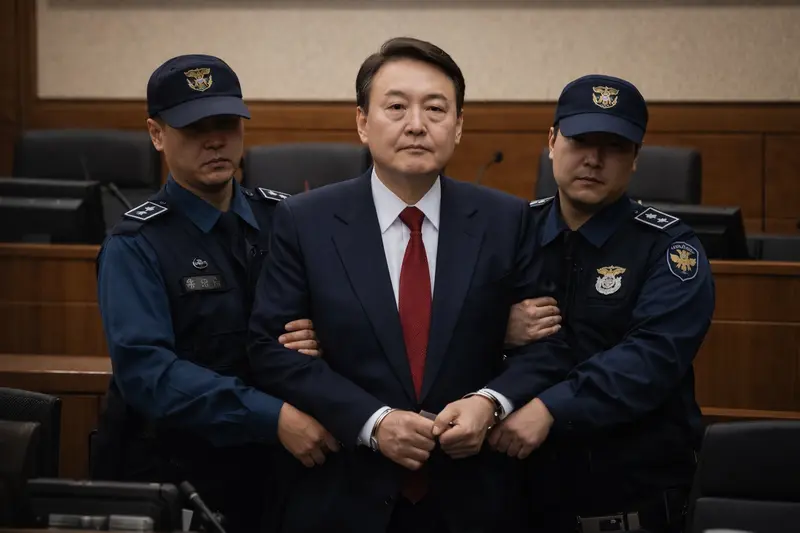
Former South Korean President Yoon Suk Yeol has been sentenced to life in prison after being found guilty of insurrection over his controversial martial law declaration in 2024.
The ruling was delivered by a three-judge panel at Seoul’s Central District Court, concluding one of the most politically explosive trials in modern South Korean history. Prosecutors had sought the death penalty, arguing that Yoon’s actions were a calculated attempt to undermine the constitution and extend his hold on power.
The crisis began in December 2024 when Yoon made a late-night televised announcement suspending civilian governance. The declaration included a ban on political activity and restrictions on media operations. The move stunned the nation and triggered immediate resistance.
Lawmakers rushed to the National Assembly overnight, pushing past troops deployed under Yoon’s orders. In an emergency session, they voted unanimously to overturn the martial law decree. Within six hours, Yoon lifted the order. However, the political fallout had already begun.
Ten days later, parliament impeached him. In January 2025, he became the first sitting South Korean president to be arrested while in office. The Constitutional Court later upheld his impeachment.
During the trial, Yoon maintained that he acted within his constitutional authority and described the declaration as symbolic and temporary. Prosecutors countered that the action was part of a long-planned strategy to consolidate power in violation of democratic principles.
Several former officials from Yoon’s administration have also received prison sentences for their roles in implementing the martial law order, including former senior cabinet members and military officials.
The episode deeply divided the country. Supporters gathered outside the courthouse during the verdict, while critics held nearby protests. Despite the tensions, analysts say the outcome ultimately demonstrates the resilience of South Korea’s democratic institutions.
South Korea is now led by President Lee Jae Myung, elected after the impeachment process concluded.
What's your reaction?
0

AWESOME!
0

LOVED
0

NICE
0

LOL
0

FUNNY
0

EW!
0

OMG!
0

FAIL!
Recent News



Comments
Leave a Reply