


World
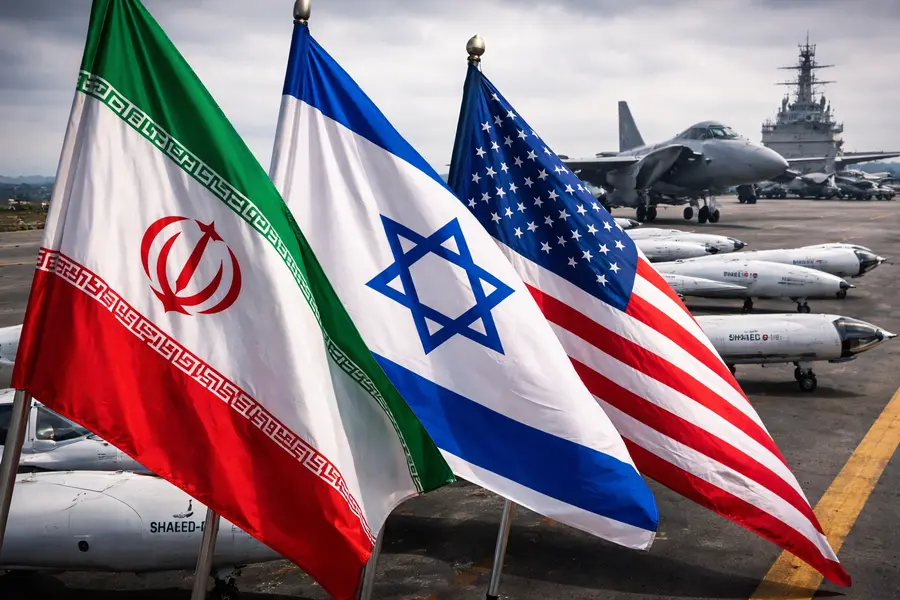
Iran, Israel and the United States: Who Would Win This War?
As tensions between Iran, Israel, and the United States continue to escalate, one question keeps appearing in public debates and geopolitical discussions: who would actually win such a war?
At first glance, many people believe the answer is obvious. Israel would be backed by the United States, one of the most powerful military forces in the world. Two countries against one might seem like a clear advantage.
However, the reality of modern warfare is far more complex.
To understand the possible outcome, it is important to start with the two fundamental pillars of any war:
economic capacity and time.
Only after those factors do military technology and firepower become decisive.
War Is Built on Economics and Time
Throughout history, wars have often been determined not only by military strength but by how long each side can sustain the fight.
A country with greater industrial capacity, stronger logistics, and the ability to maintain supply chains over time often gains the advantage.
In the case of a conflict between Iran and Israel supported by the United States, the balance becomes more complicated when geography and logistics are considered.
The United States is located more than 10,000 kilometers away from Israel, which means that any large-scale military supply effort must travel across oceans and multiple strategic routes.
While the United States possesses enormous military resources, sustaining a long war so far from its homeland presents logistical challenges.
Israel’s Dependence on External Support
Israel has one of the most technologically advanced militaries in the world, but it does not produce enough weapons domestically to sustain a long, high-intensity conflict alone against a large regional power like Iran.
That means the United States would play a critical role in supplying weapons, ammunition, and defensive systems.
However, the United States typically avoids committing its entire military arsenal in a single conflict. Instead, Washington often uses a layered strategy, supporting allies and applying pressure gradually rather than engaging in full-scale direct warfare immediately.
This calculated approach allows the U.S. to maintain strategic flexibility in multiple regions around the world.
The Strategic Role of Iranian Drones
Another major factor in the conflict is the use of Iranian drones, particularly the Shahed-136.
Although Iran does not possess the most advanced air defense systems compared to Western powers, the Shahed drone has become a powerful tool in modern asymmetric warfare.
The reason lies in its cost and simplicity.
A Shahed-136 drone is estimated to cost between $10,000 and $20,000, sometimes even less than the price of a new car.
It measures only about 2.5 to 3 meters, making manufacturing facilities small and difficult to detect.
This allows Iran to produce them in significant numbers.
The Cost Imbalance Problem
Stopping these drones creates a serious economic challenge.
To intercept a single Shahed drone, air defense systems often launch one or two interceptor missiles.
Each of those missiles can cost between $1.4 million and $4 million depending on the system being used.
This creates a massive cost imbalance.
Destroying a drone worth around $20,000 may require millions of dollars in defensive missiles.
If Iran were to launch hundreds of drones in a single attack, the cost of interception could reach hundreds of millions or even billions of dollars in a very short period of time.
Iran’s Long-Term Preparation
Iran has also invested heavily in defensive infrastructure over the years.
Reports and satellite imagery suggest the existence of underground military bases, hidden manufacturing facilities, and extensive tunnel networks designed to protect key assets from airstrikes.
These underground complexes allow Iran to maintain production capabilities even during sustained bombardment.
In a prolonged conflict, such infrastructure could allow Iran to continue launching attacks despite heavy damage to surface facilities.
The Deciding Factor: Duration of the War
In the end, the outcome of a war between Iran and Israel supported by the United States would likely depend on how long the conflict lasts.
In the short term, Israel and the United States possess overwhelming technological and military advantages.
But in a long war, factors such as logistics, economic sustainability, production capacity, and the cost of defense systems could significantly influence the balance.
Even if Iran suffers major damage, the combination of low-cost drone warfare, underground infrastructure, and strategic endurance could make the conflict far more complicated than it appears at first glance.
What's your reaction?
0

AWESOME!
1

LOVED
1

NICE
0

LOL
0

FUNNY
0

EW!
0

OMG!
0

FAIL!
Recent News


Comments
Leave a Reply