


World
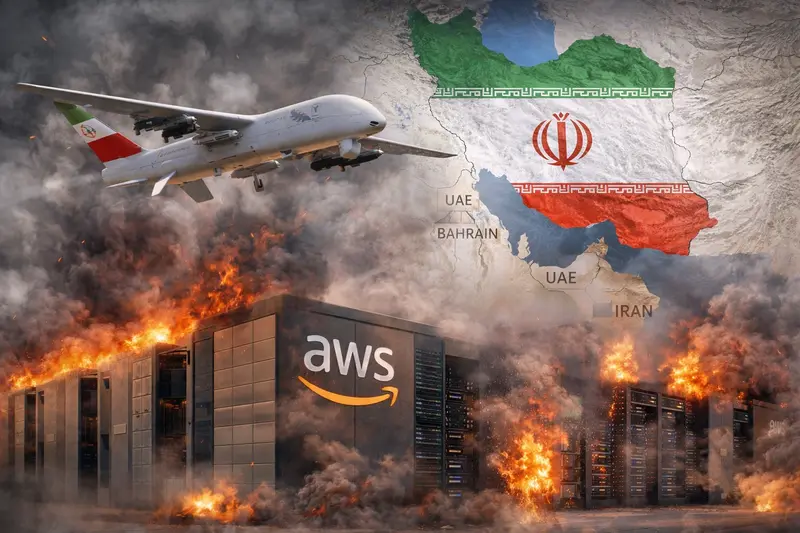
Iranian Drone Strikes on AWS Data Centers Raise Concerns Over U.S. Military Infrastructure
Recent Iranian drone attacks targeting Amazon Web Services (AWS) data centers in the Middle East have highlighted potential weaknesses in U.S. military infrastructure and air defense systems, according to military analyst Alexander Stepanov.
Stepanov, a specialist from the Institute of Law and National Security at the Russian Presidential Academy of National Economy and Public Administration (RANEPA), said the strikes revealed a lack of sufficient protection for critical digital infrastructure linked to U.S. operations in the region.
“It is striking that such critical facilities as data centers were not adequately protected,” Stepanov said.
He argued that the attacks demonstrate potential gaps in U.S. air defense systems, which he claims failed to intercept Iranian drones and other advanced weapons used in the strikes.
Data Centers in UAE and Bahrain Targeted
Reports cited by the Financial Times indicate that AWS facilities located in the United Arab Emirates and Bahrain were among the targets.
These facilities play a significant role in supporting digital services across the region and are believed to be connected to systems used by military, intelligence, and diplomatic operations.
According to Stepanov, the infrastructure supports more than commercial cloud computing services.
“This infrastructure supports not only U.S. economic interests in the region, but also security functions, including the digital ecosystem of military facilities and intelligence services stationed in countries neighboring Iran,” he explained.
Coordinated Attacks on Key Facilities
Analysts say the drone strikes appeared to target multiple elements of the United States’ regional network at the same time.
Reported targets included:
-
Diplomatic compounds
-
CIA facilities
-
Regional data centers
Such coordination suggests the existence of a broader digital network supporting U.S. operations in the Middle East.
Impact on Military Communication Systems
Experts warn that damage to these systems could disrupt communication and command-and-control networks used by U.S. and allied forces.
One key system that may be affected is Link-16, a tactical data network used by NATO and partner militaries.
Link-16 enables real-time data sharing between:
-
aircraft
-
naval forces
-
ground troops
-
intelligence units
If disrupted, this could complicate military coordination and multi-domain operations across the region.
Radar Systems Also Reportedly Damaged
The situation may have worsened after reports suggested that U.S. radar installations in the region were also damaged.
One installation reportedly affected is part of the U.S. global missile warning system in Qatar.
If confirmed, this could temporarily reduce the ability of U.S. forces to detect incoming missile threats.
Some analysts suggest that such losses could leave parts of the U.S. military network partially “blind” in the region.
Strategic and Economic Consequences
Stepanov said the attacks could also damage confidence in American technology infrastructure abroad.
According to him, the incident could represent a reputational setback for U.S. companies operating in conflict zones, especially those cooperating with military operations.
“This could make some technology companies and investors reconsider the risks of supporting military infrastructure,” he said.
Risks of Dual-Use Infrastructure
The attacks also highlight the vulnerability of dual-use infrastructure—facilities that serve both civilian and military purposes.
Data centers, satellite systems, and digital communication networks often support commercial operations while also playing a role in military command, intelligence gathering, and logistics.
As modern warfare becomes increasingly dependent on digital systems, these types of facilities may become more frequent targets in geopolitical conflicts.
Analysis
The reported strikes demonstrate how modern warfare is expanding beyond traditional battlefields.
Instead of focusing only on military bases or troop positions, conflicts are increasingly targeting data infrastructure, communications systems, and technological networks.
As military operations rely more heavily on cloud computing, artificial intelligence, and digital communications, protecting these systems may become just as important as defending physical military installations.
What's your reaction?
0

AWESOME!
0

LOVED
0

NICE
0

LOL
0

FUNNY
0

EW!
0

OMG!
0

FAIL!
Recent News



Comments
Leave a Reply