

World
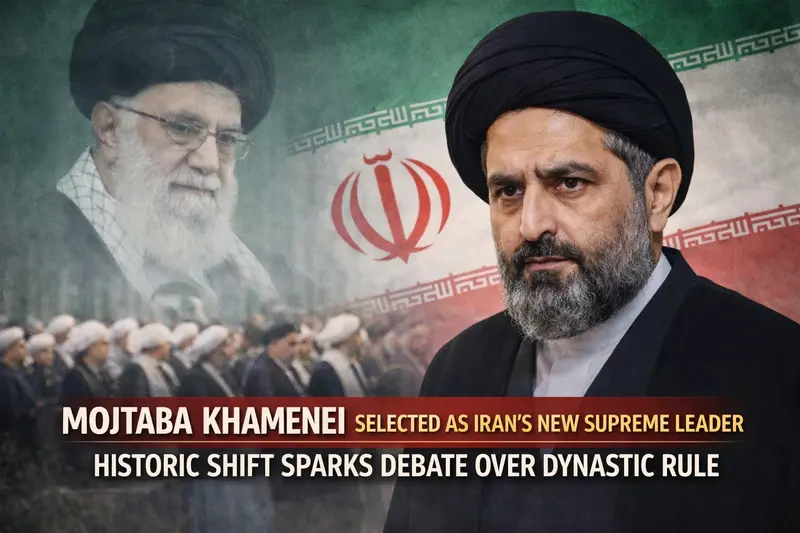
Mojtaba Khamenei Chosen as Iran’s New Supreme Leader
Iran’s powerful clerical body, the Assembly of Experts, has reportedly selected Mojtaba Khamenei, the son of the late Supreme Leader Ali Khamenei, to become the Islamic Republic’s new Supreme Leader, according to informed sources who spoke anonymously.
The decision represents a historic and highly significant development for Iran’s political system. For the first time since the 1979 Islamic Revolution, leadership of the country appears to be passing within the same family, marking a potential shift toward dynastic-style succession in a system originally founded on revolutionary principles.
A Hidden but Influential Power Figure
Mojtaba Khamenei, 55, has long been regarded as one of the most influential figures within Iran’s political establishment, despite rarely appearing publicly or holding a formal government position.
For years, he worked inside the Office of the Supreme Leader, acting as a key adviser and gatekeeper for his father. Observers often compare his role to that of Ahmad Khomeini, the son of Islamic Republic founder Ruhollah Khomeini, who played a crucial advisory role during the early years of the revolutionary government.
Over time, analysts say Mojtaba developed strong connections across Iran’s political, religious and security institutions, gradually increasing his influence behind the scenes.
Experts note that his position within the power structure allowed him to cultivate relationships with influential figures throughout the Iranian regime.
Strong Connections to the Security Establishment
One of the key sources of Mojtaba’s influence is believed to be his close ties to Iran’s security apparatus, particularly the Islamic Revolutionary Guard Corps (IRGC).
During the Iran–Iraq War in the 1980s, Mojtaba reportedly served in the Habib Battalion, a volunteer unit connected to Iran’s revolutionary forces and linked to the IRGC.
Many individuals who served in the same battalion later advanced into senior roles within Iran’s intelligence and security institutions. These wartime connections are believed to have helped Mojtaba establish lasting relationships within some of the country’s most powerful organizations.
Over the years, political opponents and reformist voices have accused him of influencing political processes and playing a role in suppressing dissent during periods of domestic unrest.
Questions About Religious Authority
According to Iran’s constitution, the Supreme Leader must possess extensive knowledge of Islamic jurisprudence and be recognized as a high-ranking religious authority.
However, Mojtaba Khamenei is not widely regarded as one of Iran’s top clerics. Although he studied in the religious seminaries of Qom under prominent conservative scholars, he does not hold the formal title of ayatollah.
Despite these concerns, Iran’s political system has previously demonstrated flexibility when the country’s ruling elite reaches consensus around a particular leader.
A Controversial Transition of Power
Mojtaba’s reported rise to the country’s highest position is likely to intensify criticism from both domestic and international observers who argue that Iran’s political system may be moving toward hereditary leadership.
For years, speculation surrounding his possible succession had already drawn comparisons to dynastic rule, something critics say contradicts the revolutionary ideals on which the Islamic Republic was founded.
After decades of operating largely behind the scenes within Iran’s power structure, Mojtaba Khamenei now appears to be stepping into one of the most powerful and controversial roles in the country’s modern political history.
What's your reaction?
0

AWESOME!
0

LOVED
0

NICE
0

LOL
0

FUNNY
0

EW!
0

OMG!
0

FAIL!
Recent News


Comments
Leave a Reply