

Business
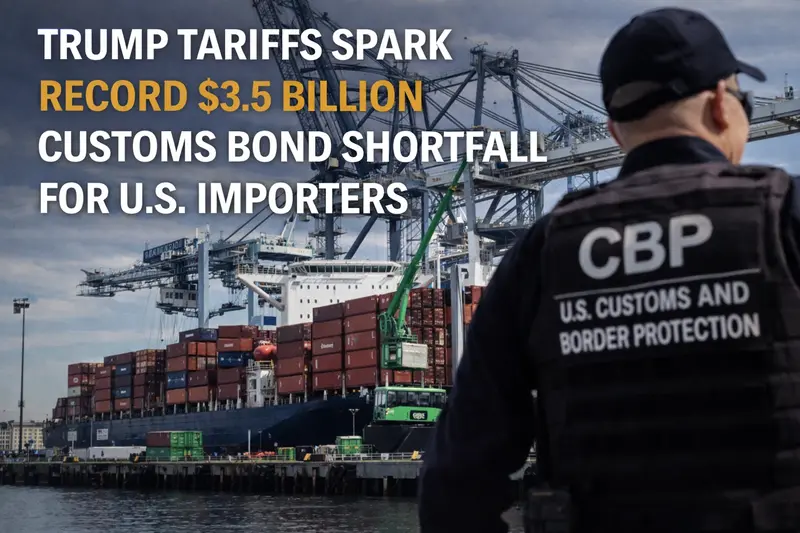
Trump Tariffs Trigger Record $3.5 Billion Customs Bond Shortfall for U.S. Importers
U.S. importers are facing mounting financial pressure as customs bond shortfalls linked to President Donald Trump’s tariff policies have reached historic levels. New federal data shows that businesses bringing goods into the United States are struggling to meet government requirements designed to guarantee payment of trade duties.
According to U.S. Customs and Border Protection (CBP), fiscal year 2025 recorded 27,479 customs bond insufficiencies, totaling nearly $3.6 billion in funding gaps. This marks the highest number and largest dollar value ever recorded — more than double the previous peak in 2019 during Trump’s first-term trade measures.
Customs bonds function as financial guarantees. Importers must secure these bonds — typically through specialized insurance companies — to ensure they can pay tariffs, taxes, and fees owed to the federal government. If a company’s bond no longer covers its rising duty obligations, it is flagged as “insufficient,” and shipments can be held at ports until the bond is increased.
The surge in insufficiencies coincides with a dramatic rise in tariff collections. Government revenue from tariffs reportedly jumped to $30 billion in January alone, with total collections reaching $124 billion year-to-date — a 304% increase compared with the same period last year.
Trade attorneys and insurance experts say many companies underestimated how sharply tariffs would raise their bond requirements. Customs bond amounts are calculated based on 10% of duties and taxes paid over a rolling 12-month period. As tariffs increase — sometimes from 10% to 25% or higher — required bond limits surge as well.
Some importers have reportedly seen bond increases exceeding 200%, with certain cases climbing more than 500%. Because these bonds are issued roughly 30 days before shipments arrive, companies may find themselves scrambling to secure additional coverage in time to release their cargo.
When a bond is insufficient, CBP can block the release of goods until the importer obtains a new bond and provides additional collateral. This process can take more than a week, disrupting supply chains and creating cash flow challenges.
Meanwhile, the Supreme Court is expected to rule on the legality of certain tariffs imposed under the International Emergency Economic Powers Act. If the court orders refunds, importers may eventually recover some funds — including portions tied to customs bond collateral — though experts caution the reimbursement process could take years.
For now, businesses importing goods into the United States must navigate rising tariffs, higher insurance costs, and growing financial exposure as trade policy uncertainty continues.
What's your reaction?
0

AWESOME!
0

LOVED
0

NICE
0

LOL
0

FUNNY
0

EW!
0

OMG!
0

FAIL!
Recent News




Comments
Leave a Reply