


Politics
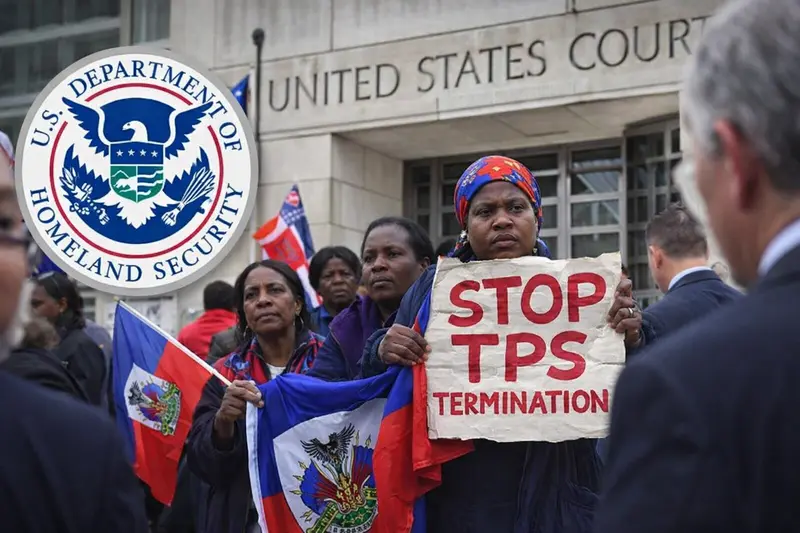
Haitian TPS Holders Faced Deportations Without Judge’s Ruling, DHS Official Says
The Department of Homeland Security would have begun deporting Haitians if a federal judge had not halted the termination of their Temporary Protected Status (TPS), an assistant director for field operations told a federal court on Tuesday.
According to the declaration, DHS had no specific plans to “mobilize Immigration and Customs Enforcement” officers to heavily Haitian-populated areas such as South Florida and Springfield, Ohio, but noted that ICE conducts daily enforcement operations nationwide and targets individuals who are removable, regardless of nationality.
The statement was submitted in response to U.S. District Judge Ana Reyes, who is considering the Trump administration’s request to lift her stay on the TPS termination order. The government argues that maintaining the stay interferes with national security and causes “irreparable harm.”
Reyes paused the TPS termination on Feb. 2, just one day before protections for more than 300,000 Haitians were set to expire.
She ordered DHS to explain any enforcement mobilization plans, specifically referencing Springfield—home to thousands of newly arrived Haitian immigrants, including over 26,000 TPS holders—and South Florida, which has the nation’s largest Haitian TPS population, estimated at 150,000.
In last week’s ruling, Reyes said that failing to pause the termination risked detention, deportation, family separation, and loss of work authorization.
In the declaration, DHS confirmed it would have enforced immigration laws “in light of the termination,” consistent with actions taken after prior TPS terminations.
Background on Haiti’s TPS
Haiti received TPS in 2010 following the devastating earthquake, but 16 years later, conditions have worsened. Henry Wooster, the top U.S. diplomat in Haiti, told lawmakers that the country faces severe political, economic, and security crises, describing it as “a nettlesome foreign policy problem.”
He warned that a coalition of over 20 armed groups threatens Haiti’s state stability and could cause systemic collapse.
During a Senate hearing, Sen. Brian Schatz criticized the move to end Haiti’s TPS, calling it “disturbing and counterproductive,” especially as the country risks total governmental collapse.
The Trump administration has canceled TPS for multiple countries—including Venezuela, Nicaragua, and Honduras—insisting the program is temporary. Advocates, however, argue that returning nationals to these countries is unsafe and allege the decisions violated federal law and may have been motivated by racial animus.
Homeland Security Secretary Kristi Noem denies those allegations, insisting her decision is not subject to judicial review.
Legal Battles and New Developments
Federal lawyers noted that the Supreme Court has twice allowed deportations to proceed while TPS cases were under appeal. They referenced these precedents again last week in their appeal.
Separately, a U.S. appeals court in California lifted a block on deportations for 50,000 Hondurans, 7,000 Nicaraguans, and 3,000 Nepalese.
The judges argued that DHS is likely to win either by proving that district courts lack jurisdiction or by showing it acted within administrative law.
The Haitian TPS lawsuit before Judge Reyes similarly argues that DHS violated the Administrative Procedures Act—and that racial animus motivated the termination. Plaintiffs cite statements by Noem and former President Trump portraying Haitians negatively, including false claims that Haitian immigrants in Springfield were eating pets.
Judge Reyes found the plaintiffs likely to succeed on the merits and rejected the government’s claim that her review authority was limited.
Advocates condemned the administration’s actions.
Lynn Tramonte of the Ohio Immigrant Alliance said federal courts “cannot allow decisions based on racism,” adding that many Haitians “will literally not survive” being returned to Haiti.
Sophia Pierrelus, founder of the New American Cultural Center, stressed that ending TPS “ignores the real consequences for families, workers, and communities who have contributed to this country for years.”
What's your reaction?
0

AWESOME!
0

LOVED
0

NICE
0

LOL
0

FUNNY
0

EW!
0

OMG!
0

FAIL!
Recent News




Comments
Leave a Reply