


World
Iran Rejects Ceasefire Calls as Foreign Minister Says War Must Continue
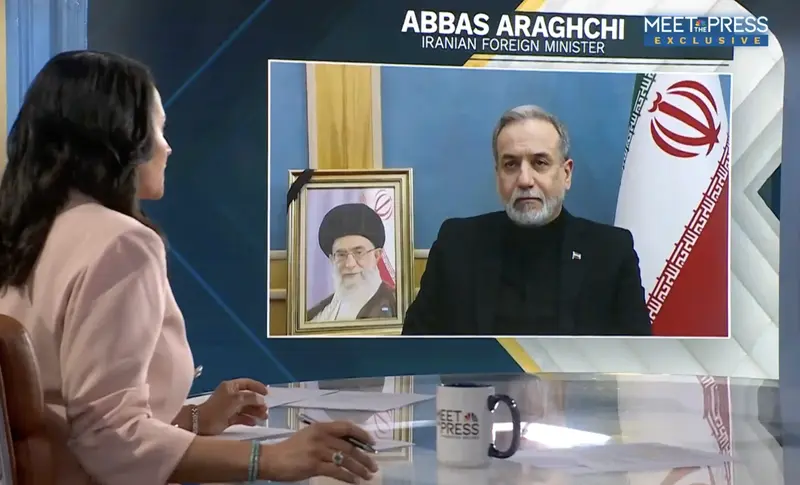
Iran’s Foreign Minister Abbas Araghchi has rejected international calls for a ceasefire in the Middle East conflict, stating that Iran must continue fighting to defend its people and national security.
Speaking on NBC News’ “Meet the Press,” Araghchi said Iran could not agree to another ceasefire while it believes attacks against its country are still ongoing.
“We need to continue fighting for the sake of our people,” he said.
According to Araghchi, both Israel and the United States are responsible for attacks that have killed civilians and damaged critical infrastructure.
“They are killing our people, they are killing girl students, you know, they are attacking hospitals,” he told NBC moderator Kristen Welker.
Iran Says Previous Ceasefire Was Broken
Araghchi argued that trust in ceasefire agreements has already been damaged.
He said the United States and Israel had previously violated the ceasefire that ended last year’s 12-day war, making new negotiations difficult.
“And now you want to ask for a ceasefire again? This doesn’t work like this,” he said.
Instead, he suggested that the only acceptable solution would be a permanent end to the conflict, rather than a temporary pause in fighting.
“Unless we get to that, I think we need to continue fighting for the sake of our people and our security,” he added.
Questions Over Russian Support
During the interview, Araghchi was also asked about reports that Russia may be sharing intelligence with Iran.
Several sources told NBC News that Moscow may be providing Tehran with information about the location of U.S. military forces in the Middle East, including data that could help identify American warships.
Araghchi did not directly confirm the intelligence-sharing allegations but acknowledged that cooperation between the two countries exists.
“Cooperation between Iran and Russia is not something new, it’s not a secret,” he said.
“They are helping us in many different directions. I don’t have any detailed information.”
U.S. Officials Respond
In a separate interview on the same program, United Nations Ambassador Mike Waltz commented on the reports about possible Russian assistance to Iran.
Waltz said the United States is aware of the long-standing relationship between Moscow and Tehran.
“We know that both Russia and Iran have had this symbiotic relationship,” he said.
However, he argued that any assistance Russia may be providing has not significantly changed the situation on the battlefield.
“The U.S. military is decimating Iran’s air force, air defenses, navy, ground forces, command and control,” Waltz said.
“So whatever they’re providing, if they’re providing anything, hasn’t shown to help them very much.”
Iran Addresses Tensions With Gulf Countries
Meanwhile, Iranian President Masoud Pezeshkian said Iran does not intend to attack neighboring Gulf countries unless they allow their territory to be used for strikes against Iran.
He also issued an apology to the region after Iranian attacks caused casualties in Kuwait, the United Arab Emirates, and Oman.
Araghchi insisted that Iran has not deliberately targeted its neighbors.
“We are attacking American bases, American installations, American assets, which are unfortunately located in the soils of our neighbors,” he said.
Analysis
The latest statements from Iranian officials suggest that Tehran is preparing for a prolonged conflict rather than immediate negotiations.
By rejecting calls for a ceasefire, Iran appears determined to continue military operations until it believes a more permanent political solution is possible.
At the same time, the growing involvement of external powers — including the United States, Israel, and potentially Russia — highlights the risk that the conflict could expand into a wider geopolitical confrontation.
For regional governments, the biggest concern is that military actions against U.S. assets located in neighboring countries could draw more states into the conflict, further destabilizing the Middle East.
What's your reaction?
0

AWESOME!
0

LOVED
0

NICE
0

LOL
0

FUNNY
0

EW!
0

OMG!
0

FAIL!
Recent News


Comments
Leave a Reply