

World
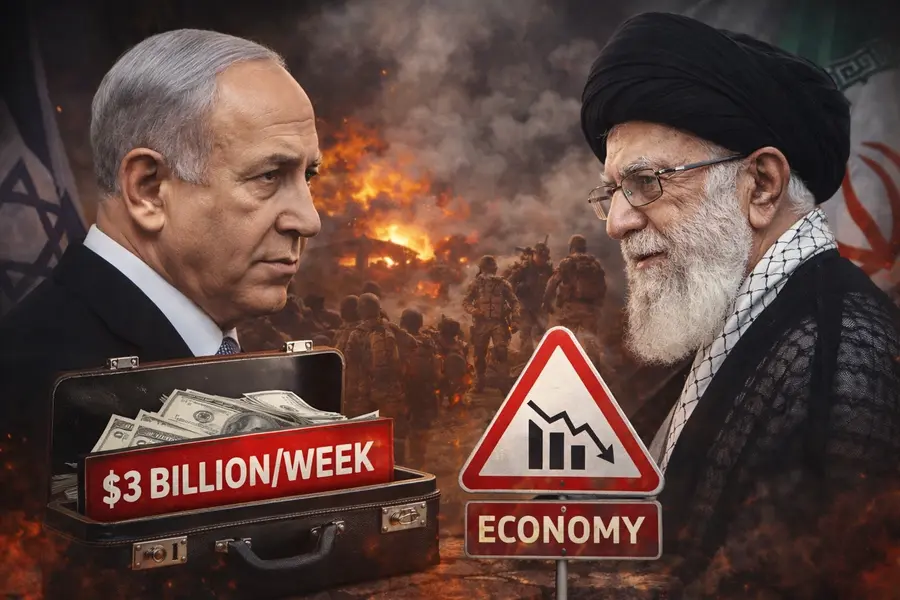
Israel’s War With Iran Could Cost $3 Billion a Week if Economic Restrictions Continue, Finance Ministry Warns
Israel’s war with Iran could cost the country’s economy about NIS 9.4 billion ($3 billion) per week if current nationwide restrictions remain in place, according to a warning issued Wednesday by Israel’s Finance Ministry.
In a letter addressed to Home Front Command chief Maj. Gen. Shai Klapper, Finance Ministry Director General Ilan Rom called for easing wartime restrictions in order to gradually reopen parts of the economy as early as Thursday.
Rom stressed that while maintaining public safety remains essential during the conflict, the widespread shutdown of economic activity is imposing severe financial consequences.
“There is no dispute about the need to preserve a defense policy adapted to the security situation,” Rom wrote. “But shutting down the economy on a broad scale carries heavy economic costs.”
Nationwide Restrictions Affect Businesses and Workers
The economic shutdown began after Israel and the United States launched joint strikes against Iran, triggering retaliatory missile attacks from Tehran.
In response, the Israel Defense Forces’ Home Front Command introduced nationwide emergency regulations. These measures prohibit public gatherings, close schools, and restrict most workplaces from operating unless they are classified as essential.
The rules also limit commuting to work and require many employees to work remotely, while educational institutions remain closed.
Earlier this week, the Home Front Command extended these restrictions until Saturday night, following further security assessments during the ongoing conflict.
Proposal to Reopen Parts of the Economy
Rom urged military authorities to shift the alert level from “red,” which allows only essential activities, to “orange,” which allows limited economic activity.
Under the current red-level restrictions, the Finance Ministry estimates weekly economic losses of NIS 9.4 billion, largely due to closed businesses, suspended schools, and the mobilization of military reservists.
Under the proposed orange alert level, workplaces could reopen if they are located close to protected shelters or safe rooms. Schools would remain closed under this scenario.
“This policy will enable the expansion of economic activity while maintaining Home Front security,” Rom said.
Business Leaders Support Partial Reopening
Business leaders have also expressed support for easing restrictions in order to stabilize the labor market.
Dror Litvak, CEO of Manpower Group Israel, said companies that have access to secure shelters should begin reopening workplaces.
“Employers who have a safe space can and should open their workplaces and make it clear to employees that the door is open if they want to come back,” Litvak said.
He added that returning to work could also provide psychological benefits for employees during a period of national crisis.
“From the perspective of employees, work is both economic security and a psychological anchor,” Litvak explained.
Economic Damage Could Be Reduced by Half
The Finance Ministry estimates that allowing limited economic activity would significantly reduce financial losses.
Under the orange alert level, weekly economic damage would drop to about NIS 4.5 billion ($1.5 billion) — less than half of the losses expected under the current restrictions.
Rom acknowledged that even this reduced level of economic disruption would still have serious financial consequences.
However, he argued that it represents a necessary compromise between security concerns and economic stability.
“We believe that this approach reflects the balance required in the current reality,” Rom said. “It allows for the minimum necessary economic activity while maintaining the required security restrictions.”
Analysis
The debate inside Israel reflects a broader challenge faced by countries during wartime: balancing national security with economic survival.
Large-scale military conflicts often disrupt labor markets, supply chains, and consumer activity. If restrictions continue for an extended period, the economic impact could ripple across multiple sectors, including technology, manufacturing, and retail.
By pushing for a partial reopening of workplaces, Israeli economic officials appear to be attempting to prevent a prolonged economic slowdown while maintaining protective measures for civilians.
As the conflict with Iran continues, economic policy decisions could become as critical as military strategy in determining the country’s long-term stability.
What's your reaction?
0

AWESOME!
0

LOVED
0

NICE
0

LOL
0

FUNNY
0

EW!
0

OMG!
0

FAIL!
Recent News


Comments
Leave a Reply