

World
Fears Grow for Iranian Prisoners as War Raises Risk of Another Evin Disaster
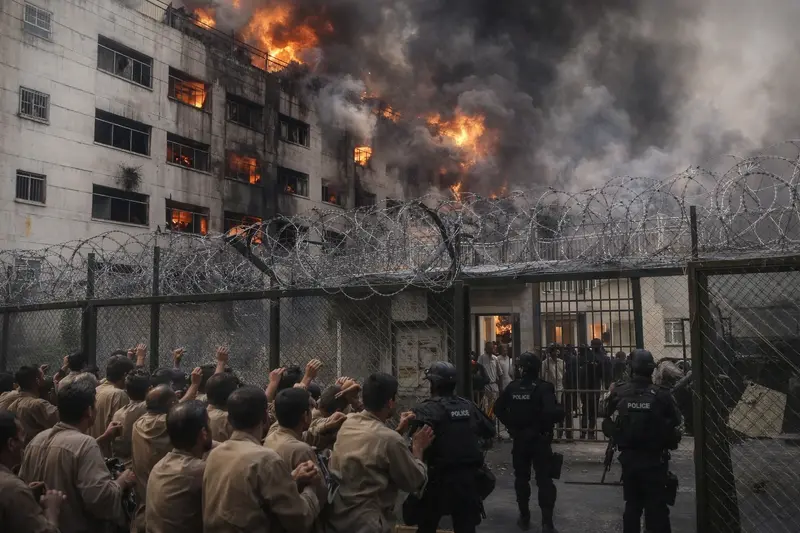
Human rights organizations and families of detainees are raising alarm over the safety of prisoners in Iran as the ongoing conflict increases the risk of another disaster similar to the deadly strike on Tehran’s Evin prison earlier this year.
Activists say conditions inside several Iranian prisons have deteriorated sharply in recent weeks, creating a dangerous and chaotic environment for inmates.
According to reports from rights groups, some non-political detainees have been released on bail while many prison staff members have reportedly abandoned their posts to seek safer locations. However, authorities have refused to grant temporary leave or accept bail for political prisoners or individuals detained during recent protests.
The volunteer lawyers’ website Dadban warned that periods of intense political or military tension in Iran historically lead to harsher treatment of political prisoners.
“In the Islamic Republic, during times of severe political or military tension, the risk of intensified repression and even retaliation against political prisoners increases,” the group said.
Warnings of a Humanitarian Crisis
Several human rights organizations — including the Committee for the Freedom of Political Prisoners and a foundation associated with imprisoned Nobel Peace Prize laureate Narges Mohammadi — have warned that a humanitarian crisis could be developing inside Iranian prisons.
According to their statements, the administrative structure inside Evin prison has largely collapsed. Reports indicate that some guards have abandoned their posts while cell doors remain locked, leaving inmates confined with limited supervision.
Food distribution and medical services have reportedly been severely disrupted. In addition, the prison shop — which many inmates rely on to purchase food and drinking water — has closed.
Families of detainees say they have received little information about the condition or location of their relatives. In some cases, political prisoners have reportedly been transferred to unknown locations without informing their families.
Rights groups say Iran’s special police unit, known as NOPO, may have taken control of Evin prison.
Meanwhile, the wife of political prisoner Mostafa Mohammad-Hassan wrote on social media that authorities were planning to transfer political prisoners and foreign detainees held in Evin to another prison in the city of Qom.
Fear of Another Evin Prison Tragedy
Reza Khandan, a political prisoner in Evin and the husband of prominent human rights lawyer Nasrin Sotoudeh, also raised concerns in a letter addressed to Iran’s judiciary chief, Gholamhossein Mohseni-Ejei.
Khandan warned that authorities appear to be ignoring repeated warnings about prison safety — similar to what happened during the 12-day war in June, when an Israeli missile strike hit parts of Evin prison.
That attack destroyed sections of the complex and reportedly killed dozens of prisoners, visiting family members and prison staff.
“This time no excuse will be acceptable,” Khandan wrote. “The direct responsibility for the lives of prisoners lies with the judiciary and the prison organization.”
Following the June attack, many political prisoners were reportedly placed in shackles and temporarily transferred to other facilities, including Tehran Greater Prison (Fashafouyeh), Qezel Hesar prison, and Qarchak women’s prison.
Conditions Worsening in Other Prisons
Activists say that deteriorating conditions are not limited to Evin prison.
According to Dadban, conditions have also worsened at Qarchak women’s prison, located south of Tehran and widely considered one of the harshest detention centers in the country.
Reports indicate that medical staff, administrative employees and prison guards have abandoned their posts, leaving the facility in a state of disorder. Water shortages — already a chronic problem — have reportedly worsened, and the prison shop is no longer operating.
At Tehran Greater Prison, blast waves from nearby explosions on March 2 reportedly shattered windows and damaged several walls. While no confirmed casualty figures have been released, reports claim prison guards used force against inmates and fired tear gas inside the facility.
A message sent to Iran International by a viewer claimed that detainees were facing severe shortages.
“My brother is in Tehran Greater Prison. For four days they have had neither water nor food,” the message said.
The same report alleged that prison doors had been welded shut and that the facility was now under the control of the Revolutionary Guards.
Rising Violence in Other Detention Centers
Similar incidents have also been reported in other parts of the country.
Kurdish news outlet Kurdpa reported that anti-riot guards attacked inmates at Mahabad prison after prisoners protested being held in unsafe wartime conditions following a strike on a nearby Islamic Revolutionary Guard Corps (IRGC) base.
According to the report, guards used tear gas to suppress the protest, injuring at least two prisoners. Food rations were reportedly reduced to one meal per day, and access to phone calls was restricted.
Analysis
The warnings from human rights groups highlight the vulnerability of prison populations during periods of conflict. When administrative systems break down and resources become scarce, detainees can quickly face life-threatening conditions.
Prisons like Evin already have a long history of controversy, particularly regarding the treatment of political prisoners. In times of war or national crisis, these institutions may face additional pressure, reduced oversight and heightened security measures.
Without increased transparency and independent monitoring, human rights advocates fear that prison conditions could deteriorate further — potentially leading to another humanitarian tragedy.
What's your reaction?
0

AWESOME!
0

LOVED
0

NICE
0

LOL
0

FUNNY
0

EW!
0

OMG!
0

FAIL!
Popular News
27 Mar 2026
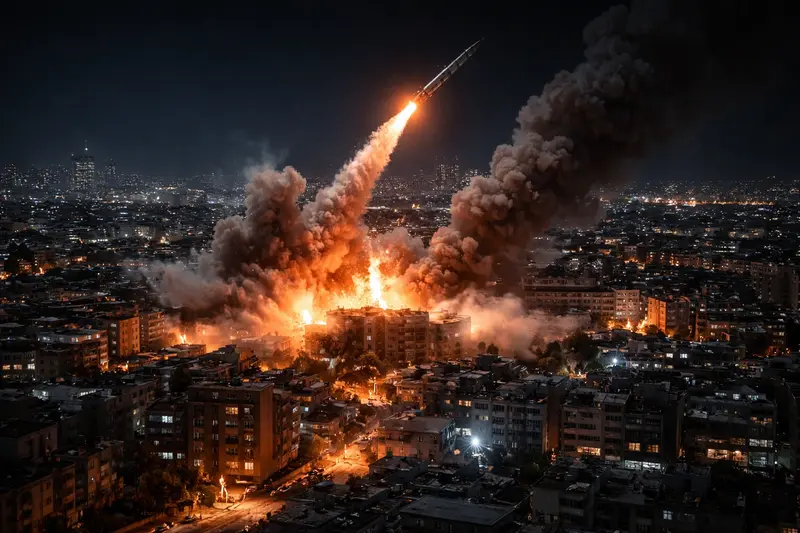
Iran’s retaliatory strikes hit Israel
Recent News
27 Mar 2026

Comments
Leave a Reply