

Immigration
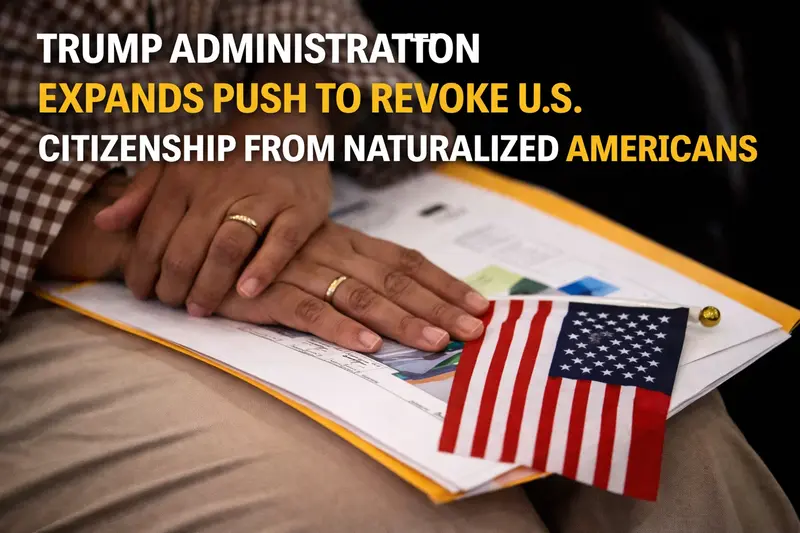
Trump Administration Expands Push to Revoke U.S. Citizenship from Naturalized Americans
The Trump administration is dramatically expanding its effort to revoke U.S. citizenship from certain naturalized Americans, marking one of the most aggressive denaturalization pushes in recent history.
According to officials familiar with the plans, U.S. Citizenship and Immigration Services (USCIS) has reassigned experts across the country to focus specifically on reviewing naturalized citizens for possible fraud or misrepresentation during the citizenship process. The goal is to identify and refer 100 to 200 potential denaturalization cases per month to the Justice Department’s immigration litigation office.
Historically, denaturalization cases have been rare and typically involved individuals who concealed serious criminal records, war crimes, or human rights violations during their applications. During President Trump’s first term, the Justice Department filed just over 100 such cases across four years.
Increased Enforcement Focus
The expanded initiative is part of a broader immigration enforcement strategy that includes increased deportation operations, visa revocations, and closer scrutiny of legal immigration pathways. Officials have indicated that the government maintains a zero-tolerance policy for fraud in the naturalization process.
The Justice Department has reportedly encouraged attorneys to prioritize denaturalization cases involving national security risks, government fraud, or serious criminal offenses. A broader provision allows officials to pursue other cases deemed sufficiently important.
Legal and Constitutional Questions
Citizenship revocation remains legally complex and requires federal court proceedings. The government must prove that citizenship was obtained unlawfully, typically through fraud or material misrepresentation. Legal experts note that denaturalization cases often take years to resolve.
Each year, approximately 800,000 immigrants become naturalized U.S. citizens. Applicants must meet requirements including lawful permanent residency, English proficiency, knowledge of U.S. civics, and demonstration of good moral character.
Immigration policy analysts and former officials have expressed concern that expanding denaturalization efforts could create uncertainty among naturalized citizens. Some argue the process should remain limited to exceptional cases involving clear evidence of fraud.
Broader Political Context
The administration has also signaled interest in revisiting broader citizenship policies, including birthright citizenship, though such efforts face constitutional challenges.
While officials argue the expanded reviews aim to protect the integrity of the immigration system, critics warn that even investigations alone can carry financial and emotional burdens for those involved.
As the initiative moves forward, the debate over immigration enforcement and citizenship rights is likely to intensify, particularly as cases begin progressing through federal courts nationwide.
What's your reaction?
0

AWESOME!
0

LOVED
0

NICE
0

LOL
0

FUNNY
0

EW!
0

OMG!
0

FAIL!
Recent News




Comments
Leave a Reply