

World
US Deploys 2,500 Marines and Warship to Middle East as Regional Tensions Escalate
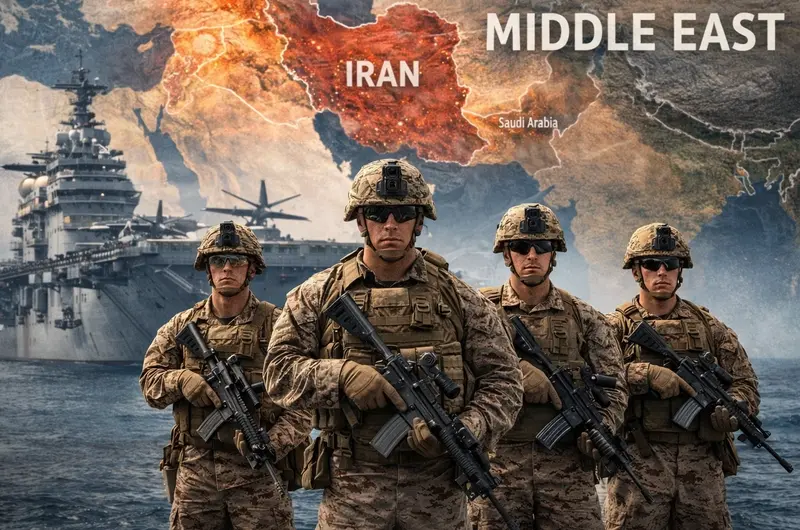
The United States is preparing to significantly increase its military presence in the Middle East by deploying approximately 2,500 Marines and at least one amphibious assault ship to the region, according to a US official cited by the Associated Press.
The official, who spoke on condition of anonymity due to the sensitivity of the military plans, said the deployment will include elements of the 31st Marine Expeditionary Unit along with the amphibious assault ship USS Tripoli.
Expanded Military Presence
Marine Expeditionary Units are highly versatile military forces trained to carry out amphibious operations, protect embassies, evacuate civilians, and respond to humanitarian emergencies.
While the move represents a major reinforcement of US forces in the region, officials say it does not necessarily signal that a ground invasion or large-scale combat operation is imminent.
The 31st Marine Expeditionary Unit and the USS Tripoli are currently based in Japan and have recently been operating in the Pacific Ocean. Their current position means it could take more than a week for them to reach waters near Iran.
Rising Regional Conflict
The deployment comes amid increasing military tensions in the Middle East.
Iran has reportedly launched missile and drone strikes targeting Israel and several Gulf states, while also restricting access to the Strait of Hormuz, a critical shipping route through which roughly 20% of the world’s oil supply passes.
At the same time, US and Israeli aircraft have continued striking military and strategic targets inside Iran.
Humanitarian Crisis in Lebanon
Meanwhile, the humanitarian situation in Lebanon has worsened as Israeli airstrikes targeting the Iranian-backed Hezbollah group continue.
Reports indicate that nearly 800 people have been killed and approximately 850,000 people displaced since the latest wave of attacks began.
Impact on Global Energy Markets
The ongoing conflict has also caused major disruptions in global energy markets. The price of Brent crude oil, a key international benchmark, has climbed to around $100 per barrel, representing a sharp increase since the conflict escalated.
Analysts warn that continued instability in the Middle East could further impact global oil supplies and economic stability.
Trump’s Comments
In an interview with Fox News, US President Donald Trump said the conflict would end when he believes the moment is right.
The president suggested the timeline for ending the war would depend on the evolving military and strategic situation in the region.
What's your reaction?
0

AWESOME!
0

LOVED
0

NICE
0

LOL
0

FUNNY
0

EW!
0

OMG!
0

FAIL!
Recent News


Comments
Leave a Reply