


World
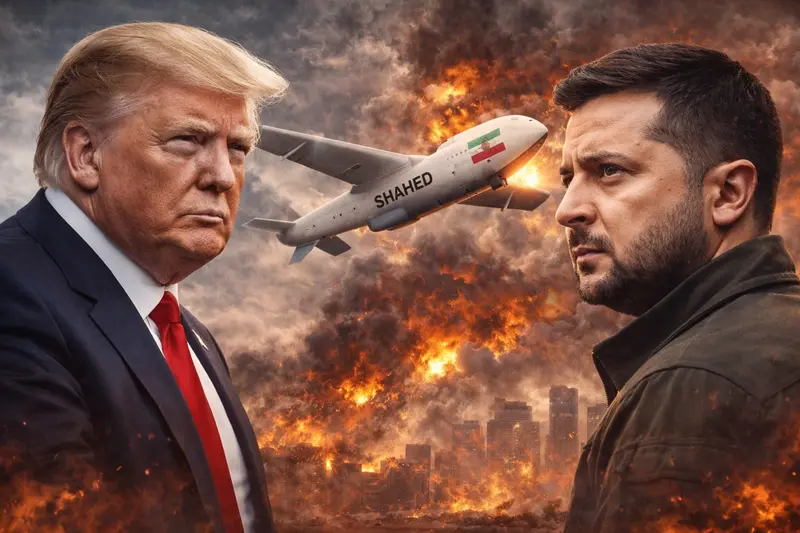
Zelenskyy Says Ukraine Will Help U.S. and Gulf Allies Counter Iranian Drones
Ukrainian President Volodymyr Zelenskyy said Ukraine is ready to assist the United States and Gulf countries in defending against Iranian attack drones by providing Ukrainian-made interceptor drones.
The announcement comes as Iranian Shahed drones have been used extensively during the early days of the ongoing conflict in the Middle East, targeting U.S. assets and military positions in the region.
U.S. and Gulf States Interested in Ukrainian Interceptor Drones
According to a source in Ukraine’s Presidential Office who spoke to ABC News, the United States and several Gulf Arab states are currently discussing potential purchases of Ukrainian interceptor drones.
These drones have proven effective and relatively inexpensive in combat situations, particularly against Iranian-made Shahed drones.
Ukraine has used similar interceptor drones on the battlefield against Russian forces, where they have successfully destroyed large numbers of Iranian-designed drones launched by Russia.
Rising Threat From Iranian Shahed Drones
The urgency of these discussions increased after a deadly Iranian drone attack early in the conflict.
According to reports, six U.S. service members were killed in Kuwait during the opening hours of the war when Iranian drones struck American military positions.
Zelenskyy confirmed that Washington had formally requested assistance.
“We received a request from the United States for specific support in protection against Shaheds in the Middle East region,” Zelenskyy said in a statement.
He added that Ukraine is ready to deploy both equipment and technical specialists.
“I gave instructions to provide the necessary means and ensure the presence of Ukrainian specialists who can guarantee the required security.”
A Cheaper Alternative to Missile Defense
One of the key advantages of Ukraine’s interceptor drones is their cost efficiency.
Traditional air defense systems such as the Patriot missile system use interceptor missiles that can cost millions of dollars per launch.
In contrast, Ukrainian interceptor drones cost only a few thousand dollars each, making them a much cheaper solution to counter low-cost drones.
Iranian Shahed drones are estimated to cost around $30,000, creating a major cost imbalance when expensive missiles are used to destroy them.
How Ukraine’s Interceptor Drones Work
Ukraine’s interceptor drones operate using a combination of cameras, artificial intelligence, and remote piloting.
The drones are designed to fly faster than Shahed drones and track them using onboard sensors.
Once a target is identified, FPV (First-Person View) operators guide the interceptor drone directly into the enemy drone, destroying it mid-air before it reaches its target.
However, the systems must be integrated with radar networks to track incoming drones effectively, meaning deployment in the Middle East may require additional infrastructure.
Growing International Interest
Ukrainian officials say that Gulf countries are already communicating with Kyiv, either directly or through the United States, regarding potential purchases of the interceptor drones.
Zelenskyy also noted that Ukraine has received signals from Middle Eastern partners after Iranian drone strikes on civilian targets.
Discussions are currently focusing on quantities, logistics, and system integration.
Ukraine Seeking Patriot Missiles
While Ukraine is offering interceptor drones to help allies in the Middle East, Zelenskyy also emphasized Ukraine’s continued need for U.S.-made Patriot missile systems.
Ukraine relies on Patriots to defend against Russian ballistic missile attacks, which are much more difficult to intercept with drones.
For more than a year, Ukraine has accelerated the development of anti-drone technologies in response to Russia’s widespread use of Iranian-style drones against Ukrainian cities and energy infrastructure.
Analysis
The possible export of Ukrainian interceptor drones reflects a growing shift in modern warfare, where cheap drones are increasingly used against high-value military targets.
Countries are now searching for low-cost defensive solutions that can counter large waves of inexpensive drones.
Ukraine’s battlefield experience has turned it into one of the world’s leading innovators in anti-drone warfare, and its technology may now play a role in protecting U.S. and allied forces in the Middle East.
What's your reaction?
0

AWESOME!
0

LOVED
0

NICE
0

LOL
0

FUNNY
0

EW!
0

OMG!
0

FAIL!
Recent News



Comments
Leave a Reply