

World
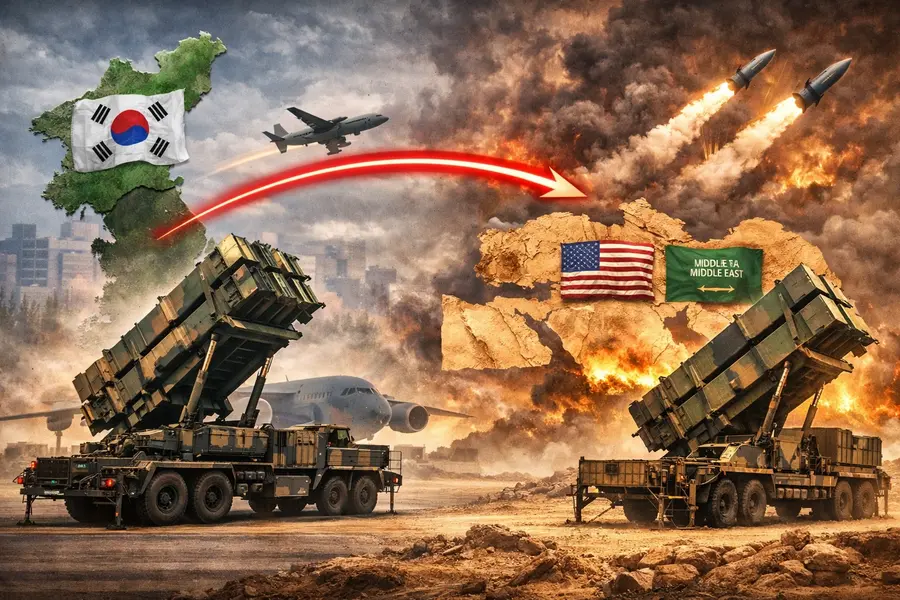
USFK May Deploy Patriot Missile Defense Systems to Middle East Amid Rising Iran Tensions
U.S. Forces Korea (USFK) may be preparing to deploy some of its Patriot missile defense systems to the Middle East, according to growing speculation following escalating tensions after recent U.S.-Israeli strikes on Iran.
South Korean authorities are closely monitoring the situation and have not ruled out the possibility that U.S. military assets stationed in Korea could be moved to support operations in the region.
Increased Military Activity at Osan Air Base
Local reports indicate that several Patriot missile defense launchers and interceptors were recently relocated from other U.S. bases in South Korea to Osan Air Base in Pyeongtaek, located in Gyeonggi Province.
By Thursday, the number of missile launchers stationed at the base had noticeably increased, suggesting potential preparations for deployment.
At the same time, U.S. military transport aircraft, including C-17 Globemaster and C-5 Galaxy cargo planes, were spotted at the base.
These aircraft are commonly used to transport heavy military equipment, including missile defense systems.
Previous Deployments to the Middle East
The presence of these aircraft has fueled speculation because C-17 transport planes were previously used to move two Patriot missile batteries from South Korea to the Middle East between March and April last year.
That deployment occurred shortly before the United States launched airstrikes on Iran in June under Operation Midnight Hammer.
The missile units returned to South Korea in October of the same year.
Growing Demand for Air Defense Systems
The potential redeployment comes as demand for missile defense systems has increased across the Middle East following the February 28 U.S.-Israeli strikes on Iran and the resulting escalation of regional tensions.
Patriot missile systems are designed to intercept ballistic missiles, cruise missiles, and aircraft, making them a key component of modern air defense networks.
Officials Remain Ambiguous
Both U.S. and South Korean officials have maintained a cautious and ambiguous stance regarding the reports.
A USFK official declined to confirm any potential movement of military assets.
“For operational security reasons, we do not comment on the movement, relocation, or potential repositioning of specific military capabilities or assets,” the official said.
The official added that USFK remains focused on maintaining a combat-ready defense posture on the Korean Peninsula and reaffirmed the United States’ commitment to defending South Korea.
Close Coordination Between Seoul and Washington
A senior official from South Korea’s presidential office also declined to comment on operational decisions related to U.S. forces but confirmed that communication between the two allies remains ongoing.
“The mission of USFK is to contribute to peace and stability on the Korean Peninsula and in the region,” the official said.
South Korean Foreign Minister Cho Hyun stated that discussions regarding the deployment of strategic military assets are handled directly between military authorities.
“In general, the military authorities of both countries maintain close consultations regarding the deployment of strategic assets,” Cho said during a parliamentary session.
Analysis
If Patriot missile batteries are deployed from South Korea to the Middle East, it could reflect a shift in U.S. military priorities as tensions rise in the region.
Such a move would also highlight the global flexibility of U.S. military resources, though it could raise concerns in Seoul about maintaining sufficient defensive capabilities on the Korean Peninsula.
The situation underscores how conflicts in the Middle East can influence security dynamics in East Asia, where the United States maintains a significant military presence to deter threats from North Korea.
What's your reaction?
0

AWESOME!
0

LOVED
0

NICE
0

LOL
0

FUNNY
0

EW!
0

OMG!
0

FAIL!
Popular News

27 Mar 2026
Iran’s retaliatory strikes hit Israel


Recent News
27 Mar 2026


Comments
Leave a Reply