

World
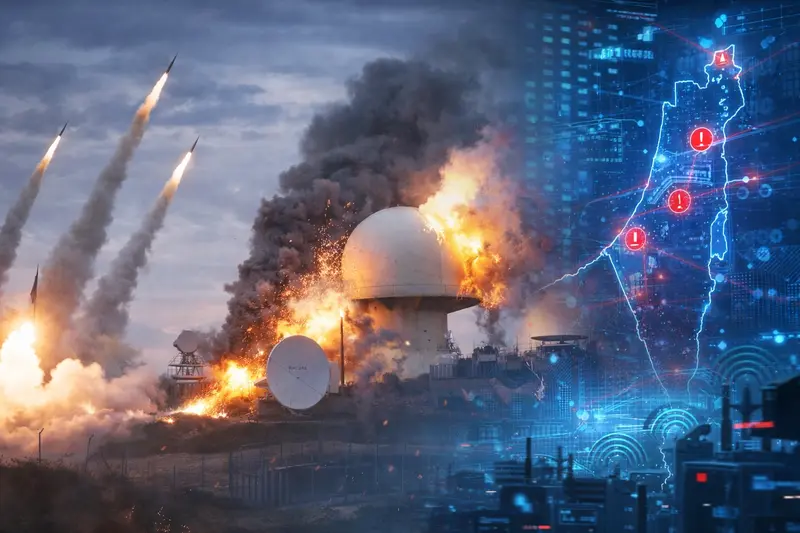
Hezbollah and Iran Intensify Pressure on Israel as Multi-Front Conflict Threatens to Expand
Hezbollah’s latest military actions against Israeli radar and satellite installations are drawing attention from analysts who see parallels with Iran’s broader strategic approach in the region.
According to Dr. Lorenzo Trombetta, a professor at Rome University, the current situation does not necessarily indicate a unified military command among Iran and its regional allies. Instead, he describes a network of actors pursuing similar strategic goals while operating independently.
“What we are seeing is a constellation of actors that share strategic interests and a broad political horizon,” Trombetta explained. “However, each of these actors operates with a significant degree of autonomy.”
Pressure on Israel’s Communications
The combination of continuous missile alerts, cyber activity, and coordinated pressure across multiple fronts is creating new challenges for Israel’s communication infrastructure.
Although Israel is believed to maintain multiple redundant communication systems designed to withstand attacks, experts question how effectively those systems will function under prolonged stress.
“Israel almost certainly maintains several backup communication networks,” Trombetta noted. “But the key question is how efficiently they can operate under sustained pressure.”
Expanding Military Fronts
Hezbollah’s involvement has effectively increased the number of active fronts facing Israel. This situation stretches Israeli military and intelligence resources across different theaters simultaneously.
Israel’s traditional military doctrine emphasizes rapid, decisive campaigns aimed at maintaining escalation dominance. However, the emergence of threats from multiple directions complicates that strategy.
Analysts warn that additional regional actors could further intensify the situation. The Yemeni Ansar Allah movement, commonly known as the Houthis, could potentially join Hezbollah operations and Iranian long-range missile activity.
Strategic Pressure Rather Than Immediate Defeat
Despite the rising tensions, experts emphasize that the current challenge for Israel is not necessarily an immediate military defeat.
Instead, the greater concern lies in maintaining strategic coordination and stability while facing continuous pressure from multiple fronts.
“The challenge is less about immediate military defeat and more about maintaining strategic coherence under sustained pressure from several directions,” Trombetta explained.
A Fragile Regional Balance
For now, the Yemeni front has not officially opened in the conflict. However, analysts warn that the balance of power in the region could shift quickly.
Israel currently faces asymmetric warfare involving Iran, Hezbollah, and potentially Ansar Allah—each employing different tactics and operational styles.
Experts stress that the situation must be monitored continuously as the conflict evolves and as regional actors adapt their strategies.
What's your reaction?
0

AWESOME!
0

LOVED
0

NICE
0

LOL
0

FUNNY
0

EW!
0

OMG!
0

FAIL!
Popular News
27 Mar 2026
Iran’s retaliatory strikes hit Israel
Recent News
27 Mar 2026

Comments
Leave a Reply