
World
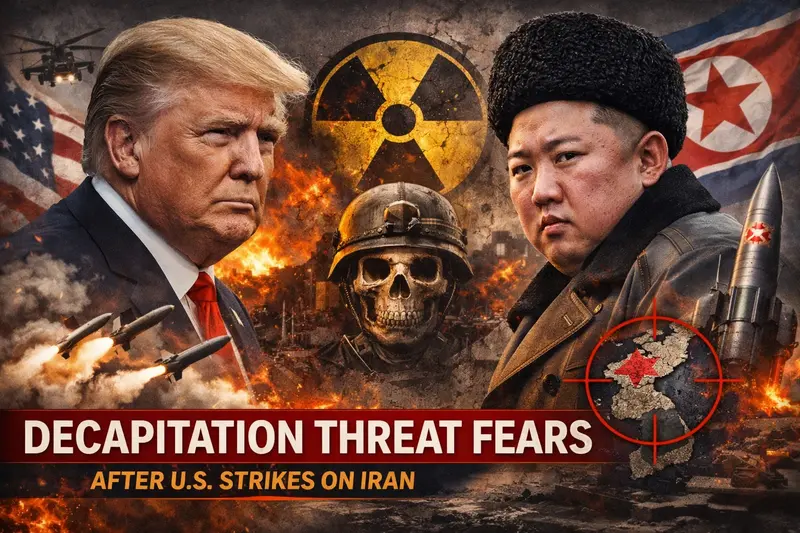
North Korea Sees Greater “Decapitation Threat” After U.S. Strikes on Iran, Experts Say
After Iran Strikes, North Korea Sees Decapitation Threat as “Much More Real”
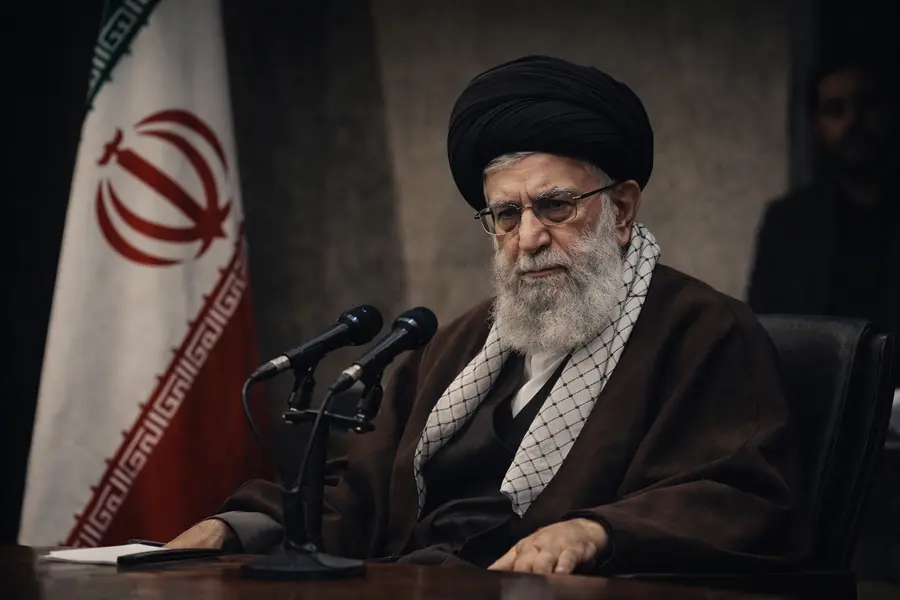
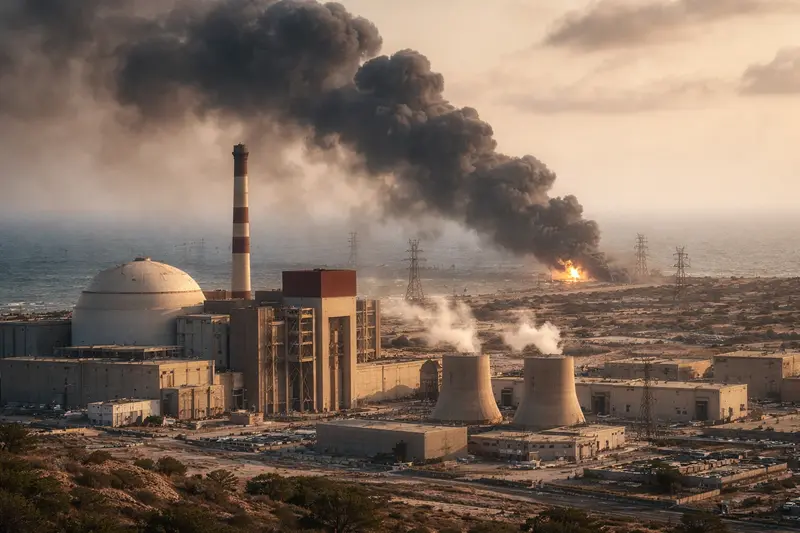
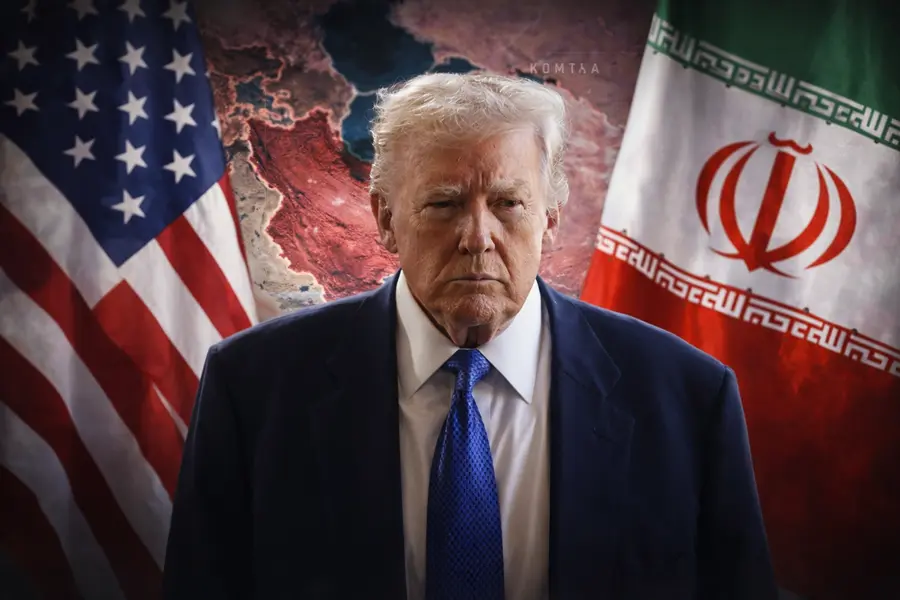
Recent U.S. military strikes on Iran are being closely watched in North Korea, where analysts believe the events are reinforcing fears that Washington could attempt to remove hostile leaderships.
Experts say the operation sends a broader geopolitical message beyond the Middle East, signaling that the United States is willing to act against governments it views as nuclear threats.
U.S. Defense Secretary Pete Hegseth said Wednesday that Washington’s actions in Iran were aimed at addressing Tehran’s “nuclear ambitions” and would “send plenty of signals in the process.”
According to analysts in Seoul, the message is not only directed at Iran but also at North Korea, which maintains one of the world’s most advanced nuclear weapons programs outside the recognized nuclear powers.
A Warning Pyongyang Is Watching Closely
The comments came shortly after Elbridge Colby, the U.S. under secretary of defense for policy, described North Korea and Russia’s nuclear capabilities as the “primary existential threat” facing the United States.
For North Korean leader Kim Jong-un, the most significant takeaway may be the apparent willingness of Washington to target hostile regimes.
Go Myong-hyun, an analyst at the Korea Institute for Defense Analyses, said the recent operations demonstrate that the United States has real capabilities to remove adversarial leaders.
“The decapitation capabilities the U.S. has just shown in Venezuela and Iran are, in fact, real and powerful,” Go said.
“For a regime built around protecting the leader above all else, that makes the threat feel much more real in Pyongyang.”
Nuclear Weapons Seen as the Ultimate Protection
The developments could push North Korea to strengthen its nuclear arsenal rather than reduce it, experts say.
Cha Du-hyeogn, vice president of the Asan Institute for Policy Studies, believes Pyongyang may be drawing two different conclusions at the same time.
First, the strikes show that a country can be attacked before it successfully develops nuclear weapons.
Second, even nuclear-armed states may still face targeted military operations.
“That will feed both paranoia and stubbornness,” Cha said.
“They will feel more vulnerable, but also more certain that Washington will never accept them as a legitimate nuclear state.”
Doubts About Support From China and Russia
Another lesson North Korea may be learning from the events in Iran is that major allies may not provide direct military assistance.
Although China and Russia expressed diplomatic support for Iran, neither country intervened militarily.
This could reinforce Pyongyang’s belief that its survival ultimately depends on its own military capabilities.
Possible North Korean Response
Experts believe North Korea will likely respond by intensifying two major strategies.
According to Oh Gyeong-seob of the Korea Institute for National Unification, Pyongyang may continue demonstrating its ability to strike both South Korea and the U.S. mainland.
This includes expanding missile launches from land and sea.
At the same time, North Korea may attempt to keep diplomatic channels open with Washington.
Despite condemning the strikes on Iran, Pyongyang has avoided launching an aggressive propaganda campaign or making direct personal attacks against former U.S. President Donald Trump.
“They understand that they still need some room for negotiation with Washington,” Oh said.
“Overreacting now could push Trump further toward military options, the outcome they are desperate to avoid.”
Analysis
The situation highlights how military actions in one region can influence security calculations elsewhere in the world.
For North Korea, the events in Iran may reinforce the belief that nuclear weapons remain the ultimate guarantee of regime survival.
At the same time, the demonstration of advanced intelligence-driven military operations may increase concerns in Pyongyang about the vulnerability of its leadership.
As tensions continue to evolve, the strategic balance between deterrence, diplomacy, and military pressure is likely to shape the next phase of relations between the United States and North Korea.
What's your reaction?
0

AWESOME!
0

LOVED
0

NICE
0

LOL
0

FUNNY
0

EW!
0

OMG!
0

FAIL!
Popular News
27 Mar 2026
Iran’s retaliatory strikes hit Israel
Recent News
27 Mar 2026

Comments
Leave a Reply